Showing posts with label T.S. Eliot. Show all posts

Monday, April 25, 2011

Vincent Price | Poetry | Symbiosis


"There is a wonderful, simple conversation encoded in all poems worthy of the name: 'You've felt this, too, haven't you?'"
- Carol Rumens

"I don't want to read about some of these actresses who are around today. They sound like my niece in Scarsdale. I love my nice in Scarsdale, but I won't buy tickets to see her act."
- Vincent Price

Poetry and theatre have always endured an uneasy symbiotic relationship. Poets and philosophers are always returning to the ramifications of Shakespeare’s pivotal proclamation that ‘all the world’s a stage’, examining the extent to which we can ever cease to play roles as we flit around the elements of our fragmented psyches.

This principle has overshadowed the work of Hugo Williams, himself the son of an actor, throughout his work. From one of his earliest poems, The Actor,

‘Sent by his agency to this bright
Box, all his lines straight, knew
Where to die, but was not quite

Sure who he was…’ (1965)

to his most recent work, such as West End Twilight,

‘Reflections shimmer back and forth
as we watch Hugo Williams strolling through
the long twilight of upper-middle-class
light comedy, arm in arm with his son’ (2009).

A poet who goes one step further in interrogating the role of theatricality and persona in poetry is Owen Sheers, who preludes his second collection, Skirrid Hill, with a fascinating short piece called ‘Last Act’:

‘The previous scenes stacked in the wings
and at the centre, under the spotlight,
the actor, bowing as himself
for the first time all night’.

For me, this is an ingenious way to begin a collection, as it poses a manifesto of sorts as to what poetry, in Sheers’ eyes, is. Whilst he acknowledges the multitude of personae occupied by any person in a lifespan, he suggests that his collection is ‘the first time’ for us to catch a glimpse of the man without his stage makeup, costume and dramatic conceit.


Contrary to what we may expect, this is not an indication of Sheers’ poetry lacking theatricality. Lines such as

‘Cut to us, an overhead show, early morning.
Lying in bed, foetus curled,
back to naked back.’
(from Four Movements in the Scale of Two)

and

‘the way he offers the seat,
his practiced look of concern and the slow pace of his voice.’
(from Amazon)

show us that Sheers may have stepped before the audience as himself for the first time, but any ‘self’ is still unavoidably a performance.

This concept is further complicated when we bring in the notion of poetry performed by actors. Paul Scofield’s fine performance of Eliot’s Four Quartets is a beautiful medium for a poem founded on opacity and disjointed aspects of the soul, but does it move us farther from the poem’s honesty? We are not listening to Eliot as such, but rather an actor’s inference of Eliot’s intentions, with speculation on appropriate emphases and pace.

It is a sort of poetic refraction, if you can remember back to your days in the science lab, casting white light through a prism and seeing it broken into its composite spectrum as it is slowed down by the medium. And this ‘prismic effect’ is only in the case of sensitive, intelligent readers such as Scofield who allow the original light of the poem to emerge from the other side. It is far more common to see actors entirely mismanage the delivery of a piece through mis-reading which leaves the audience with something entirely unintended by the poet.

And so it is that the roles played by the poet and the roles played by the performer create an unavoidable background noise through which poems must fight before they arrive wearily at an audience’s ears.


An actor who illustrates the symbiosis perfectly is the great Vincent Price. It is difficult to speak of Price for any length of time without touching upon his relationship with the poet and novelist, Edgar Allen Poe. Price starred in several highly successful adaptations of Poe’s writing, including House of Usher (1960), The Pit and the Pendulum (1961) and The Masque of the Red Death (1964). Price’s finest performance in an adaptation of Poe’s work however, is in the 1972 television special An Evening with Edgar Allen Poe, in which he delivers four of the writer’s short stories as a series of dramatic monologues.

Along with his reading of the absurdly over-quoted (thanks in part to The Simpsons) The Raven, Price’s relationship with the work of Poe is entirely congruent with his public image and the nature of his oeuvre. Poe wrote doleful, gothic literature of lonely men turned cold and diabolical by the passing of lost loves. Price’s career thrived in such roles and so, when called upon to act out a dramatisation of Poe’s work, he often drifted further towards the self-parody that characterises his appearances on Alice Cooper’s Black Widow and Edward Scissorhands.

Like so many actors of such an idiosyncratic nature, Price knew that his audience were more concerned with his ongoing relationship with the role of ‘dastardly loner’ than witnessing any real widening of his dramatic boundaries. For this reason, I do not engage with his Edgar Allen Poe work as anything other than competent entertainment.

There is evidence to suggest however, that Price was both a sensitive and cerebral reader of poetry when he was freed from the constraints of being ‘Vincent the Villain’. This evidence exists in a recording made by Price in 1956 of him reading the poetry of Percy Bysshe Shelley, which can be listened to in its entirety here.

Shelley is just as steeped in gothic myth as Poe, but one gets the impression, when listening to Price’s reading of Shelley’s work, that he is not simply engaging with the poetry as ‘Vincent Price – Gothic Commodity’, but rather delivering the words as an earnest character actor.


Perhaps this is because Price is only beginning to become synonymous with horror at this point in the career, or perhaps he is simply aware that the audience for a Shelley-LP is going to want more than villainous hammery, but what we get when we listen to this recording is something far more vulnerable and honest than we get at almost any other point in his career.

This is best witnessed in Price’s reading of Shelley’s, Adonais. Over the thirty minutes of this memorial piece at the passing of John Keats, Price has all the issues of mortality, eroding faith and despair that he turned into such complacent ‘Price-ness’ in his readings of Poe. Yet here, in his engagement with Shelley, we see something far more delicate and nuanced.

We see Price’s exploration of all elements of the grieving process, never overplaying or working against Shelley’s original masterpiece, but rather treated with all the variations of a musical score, with its dramatic crescendos, ritardandos, legatos and cadences. As Price gasps the words ‘No more let Life divide that which Death can draw together’, his archetypal public perception is nowhere to be seen, but rather we hear a man at his most human, his most vulnerable, furthest from a detectable persona.

Poetry’s relationship with actors can often produce terrible, crass and unhelpful results, as the poet’s words are designed to contain enough innate drama to supersede any overzealous reading. Sometimes however, the symbiosis between page and stage hits an equilibrium that will stop you in the street and make you turn up your headphones, or close all the windows in your house so that there can be no disruption to the irreplaceable feeling of the best words in the best order played out upon the finest instrument.

Phil Brown
Poetry Editor

Tuesday, April 19, 2011

Sea | Wider Sailing | The Love Ditty of an 'eartsick Pirate

I have been looking forward to our sea-themed week for some time now, mainly because it gives me an excuse to link to one of my favourite things that exists. If you have not read this already then you are in for a real treat.


Some while ago now, the multi-talented blogger and poet, Katy Evans-Bush, who is known to many as Baroque in Hackney, contributed a complete re-write of T.S. Eliot's The Love Song of J. Alfred Prufrock, translated into pirate-speak.


It opens thus:


"It’s time we be goin’, me hearty, avast!
When the night’s nailed up its colours to its mast
Like some swab loaded to the gun’les ’n’ lashed to the plank;
Arr, make our way by th’ ghosty ports o’ call,
The bloody Triangle,
Quietin’ the parrots, kippin’ in dens of iniquity,
Where the scraps o’ the earth mixes with the scrapin’s o’ the sea:
Down alleys where ye argues if ye durst:
The forebodin’ of th’ accursed:
An’ all to get ye to the point of a certain little matter …
Nay, never ask what it may be,
There be a gentleman I’d like ye to see."


It is truly spellbinding to see how well this poetic conceit lasts for the entire length of Eliot's rather long poem. Its strength is in the way that Evans-Bush is inventive with both the lexicon and the syntax of the cartoon pirate. To read the entire thing over at Horizon Review, click here.


Phil Brown
Poetry Editor

Saturday, October 2, 2010

Generation | Poetry | TS3L10T


"Poems are machines for remembering themselves."
-Don Paterson

For the first time in years I went cycling today. It was exhausting. I kept thinking to myself 'machines are much better than people at the whole transport thing, aren't they?' I mean, having a nice bike ride or a run from time to time is pretty fun, but cars are essentially better built for the job, in terms of efficiency and all that, right?

Successful Machines = Efficiency + Autonomy + Saving of Money + Sexy Design (optional)

My point is... I have recently been reading an equally fascinating and mind-numbing thesis on machines being able to generate poetry. Aside from the idea itself being quite poetic, the paper makes for frustrating reading. I get the impression that the author, one Hisar Maruli Manurung, doesn't spend much time with poets, based on phrases like:

"We propose a model of poetry generation as a state space search problem, where a goal state is a text that satisfies the three properties of meaningfulness, grammaticality, and poeticness. We argue that almost all existing work on poetry generation only properly addresses a subset of these properties."

Part of me likes the idea of poetry being the litmus test for the existence of A.I., as it is supposedly "a task which, if done by a human, requires intelligence to perform." Is the hard-wiring of a soul provable only through poetry? Would The Terminator enjoy Ezra Pound? I can sort of imagine his data-scrolling infra-red vision scanning the Cantos for esoteric references. 

The problem with this line of research is that poems are fundamentally at odds with machinery in so many ways.

Firstly, poetry ain't efficient and it certainly isn't about saving money. To write, read and publish poetry is a financial dead-end, and is procrastination of the highest order. Poetry is what happens when you try to take your mind for a walk in the park and it stays rooted for hours, sniffing the trunk of a tree covered in another mind's piss.

The biggest problem with this research however, is that it is based on a false premise. Writing poetry is not "a task which, if done by a human, requires intelligence to perform". Sorry poets, but it's not. In fact, poetry is often a task which requires its writer to fight against their own intelligence, combating prolixity and deliberate encryption in the name of honesty. Sometimes.

What does require intelligence however, is reading poetry. This is the biggest problem with the premise of a machine generating poetry... poems are designed to make the readers do half the work themselves. The Red Wheelbarrow is the finest example of this - the poetic sentiment is there once we realign our perceptions and bring our own semantic contributions to the reading.

This is why, when we interrogate Manurung's thesis, he is not genuinely giving us the promise of a machine that writes poems but rather assuring us "that computer programs can indeed autonomously generate texts that are considered poetic". And right there, in that word 'considered' is the achilles heel of the argument. For all the ideology behind 'meaningfulness+grammaticality+poeticness=poetry', the only thing that makes something officially poetic is 'consideration'.


Well, I argue that we don't need machines to sit round naval gazing, poking away with quill and parchment. Humans and machines have always lived in a shifting artistic equilibrium. Look at what beautiful artistic movements came as a result of the camera doing a much more convincing job of portraiture.

Now consider thermal imaging, ultra-sound scanners, aeroplanes, iMax, triple-distilled vodka, roller-coasters, silent discos, Facebook...

These things are all doing the job of poetry. That is, they are showing us the same world we have always lived in, but in a way which we are not always ready for. And, as a result, our poetry is effected. We scribble our verses now, not at the pace of footfall, but at the speed of engines. Our references and influences and motifs are as varied as the internet allows us for inspiration. Our egos and ids are irreversibly hacked into by every aspect of the media.

So please, by all means train a computer to write poetry, but I implore you not to do so until you have programmed it to start running an application for jaded solipsism every time it gets a bad review.

Monday, July 5, 2010

Youth | Poetry | ‘A Kindred Spirit’


Who’d you want this made out to, mate?

“ ‘The Whizz-Man’ will never fit you like ‘The Whizz-Kid’ did.”
-Ben Folds, Bastard

“After a certain age, a poet’s main rival is the poet he used to be.”
-William Logan


At about the age of 15, I had it in my head that I might like to be a stand-up comedian. Things didn’t go all too badly, truth be told. Eventually getting through to the 2003 semi-finals of the ‘So You Think You’re Funny’ competition, I ended up playing at a fairly decent venue up in the Edinburgh Festival and got what I would honestly refer to as a decent reception.

So, why did I stop? Well, biology being what it is, I started sprouting hair from my face, losing my cheeky-chappy childish appearance and began to look like what could be accurately referred to as ‘some bloke’. Whilst this isn’t a disaster in itself, it did mean that I’d lost the discernible edge over all of the other comedians I had been billed with thus far – all that material about under-age drinking and the tedium of school life stopped being an endearing report from the front line of youth, but rather just ‘some bloke’ talking about being a kid.

So, my options were simple: raise my game and adapt my material to suit its adult narrator or give up and do something easier. As has been the case in many of my life-choices (but not all of them) I chose the latter option.

Why do I bring this up in relation to poetry? Well, we’ve all had the ‘Keats died when he was 25… can you believe that? He wrote all the stuff about nightingales and Autumn and merciless belle dames before he was 25! I mean, really can you fu-” and so forth, speech.


Of course, this is not unique to Keats. We get similar diatribes on the subject of famous wunderkinds all over the poetic landscape; Rimbaud writing his entire oeuvre in his teens before deciding that gun-running might be a better pursuit; Eliot writing Prufrock at the age of 22; Wilfred Owen capturing the full magnitude of the horrors of battle before dying at the age of 25.

As readers and writers, we lap all this up. How many of you have read the mini-biographies of your favourite writers and worked out whether you are on course to do as well as they did when they were your age? How many of you took the awful drudge you wrote as a child seriously, strengthened in your resolve because some precocious savant made a name for themselves doing so a few hundred years ago? Take this quotation from e-poseur, Daniel Pecheur:

“I love Rimbaud, he's my favorite poet. I find a kindred spirit with him and his amazing talent and original imagination fascinate me with how he infuses them into visionary works of poetry. His mind was exceptionally prodigious and yielded some of the most colorful images I've ever enjoyed in poetry. He definitely stands out to me as the pole-star of the French Symbolist movement during the 19th century, rife with bohemianism and absinthe, both of which the genius Rimbaud reveled in with his creative glory.”

It sickens me when Poetry (the omniscient collective consciousness of all who call themselves part of ‘poetry’) thinks that it is above mainstream marketing and pop-culture just because relatively few people buy its products. Thanks to the marketing shtick and hyped up mythos, we have poor, obnoxious Daniel here thinking that Rimbaud is a “kindred spirit” because of his “amazing talent” and, I assume from Pecheur’s precocious profile picture, because Rimbaud was young when he became “the pole-star of the French Symbolist movement”. Does anyone remember S-Club Juniors?

Not that I am equating the work of Rimbaud with S-Club Juniors… I am simply making the point that by focusing on how young these accomplished writers are, we have generations of readers and writers who do not aspire to their skills but to their early success.


The publishers are wise to this too. I have taken three extracts from editors’ notes on three of the most talented young writers of my generation. I have changed the writers’ names in these as it is their semantic treatment that I wish to discuss, rather than their work.

1. “Blenkinsop developed a strong interest in poetry in his early teens and published in several leading magazines, who were unaware of his age.”

2. “Stevenson started writing poetry when she was fifteen and was a Foyle Young Poet of the Year in…”

3. “A strong, young enquiring voice embedded in atmospheric, superbly well-made poems that picture, question and challenge.”

It seems strange to me that publishers often feel the need to bait the marketing hook with the youth of certain poets, whilst the poets themselves often seem to be trying their hardest to cover up their infancy with grand allusions, authoritative voices and ‘grown-up’ subject matter.

I remember being at a book launch last year, where a poet (you know who he is, we seem to talk about him every 5 minutes on this website) said “this new book of mine will not get as much media attention as the last one, for my last book made me the youngest ever nominee for the Forward Prize… I assure you however that this new book of mine is much much much much better.” I am reminded of the Meat Loaf lyric, “a wasted youth is better by far than a wise and productive old age.”

Then the worries start setting in that if I haven’t got my Nobel by the time I’m 25, I’ll be a washed-up has-been on the banks of the River Literaria. Or if I make the withered old age of 28 without having a publishing deal then I will have to gracefully skulk off and take up stamp-collecting to take up my now-redundant writing-hours.

But then the answer to such concerns is always the same. “Shut up and write some poetry for a change.”

For the official Soundtrack to this article, click here.

Phil Brown
Poetry Editor

Tuesday, May 25, 2010

Issue 1 | Poetry | C-Words

I’ve always been somewhat of a completist. As a comic-book aficionado I would never be satisfied with a series until I’d owned every copy dating right back to the first. If I hear a song I enjoy on the radio, I react by saving up enough money to buy that band’s entire back-catalogue. If I enjoy a film, then I make a point of watching every  featurette and every interview I can find on the DVD until I feel like an authority on that movie.

I wouldn’t have brought this up unless I’d known that you all do this too. We’re a society obsessed with being vs. seeming. We trawl through bonus-discs and acoustic versions and making-ofs and rare B-sides and interviews. We’re addicted to what’s on the other side of the curtain.

In many ways, this outlines our obsession with those two dirty ‘C’ words in poetry – ‘Collected’ and ‘Complete’. Those two flirtatious little words are dotted across the spines on my shelves making the same promise we’ve all fallen for; ‘To read me, is to have the whole picture. I will take you back to where it all started and you will know this poet.’

We all want to go back to the start, read the complete Robert Frost as if we were the first people to discover him and chart his progress. We all flick to that first collection thinking ‘now, I will be experiencing the real poet, before he learned to hide himself in all that poetry.’ The idea sits there in our heads, that if we can go back in time to where the poet is finding their feet, then we will find that, just as we suspected, they are just like us behind all that talent and fame.

The more I play the debut game though, the more I realize it’s a false economy. The debut collection often represents the poet at their most guarded. The esoteric allusions come thicker and faster in many cases as a résumé to ward off the anti-youth brigade. It’s also a cliché but entirely true that a debut collection has often taken a whole lifetime longer to write than any of its follow-ups… often a lifetime spent without much first-hand experience of the literary community and professional criticism. I do genuinely believe however, that the internet is slowly but surely shifting trends in self-awareness and the value that writers and people who write place on their work.

Let me save you some time. Behind all that talent and (often posthumous) fame, poets are just like you. They watch trashy television shows and eat fast food. They have the exact same relationship problems that you have. They all worry sometimes that their life has been pointless. They lay awake at night wondering whether or not to send an email to their ex. They get pissed off when other poets beat them for a promotion. At one point or another, they have all broken wind. If you take all these things as read, then you will not need to go trawling through ‘Complete’ collections waiting for the poets to tell you this for themselves.

What you will find in debut collections, however, is the poet’s opening gambit. Their entrance music if you will. I have taken the liberty of composing 30 Haiku-Reviews of debut collections from people I respect. You will see that, in a few cases, it is not their abilities as a poet that I respect in these people, but there is nobody on this list that I do not look up to for one reason or another.


Ted Hughes – Hawk in the Rain

Devastatingly
powerful in its address
and orality.


T.S. Eliot – Prufrock and Other Observations

How very awkward
and solipsistic it is
to be middle-classed.

Robert Lowell – Land of Unlikeness

So very prolix
and esoteric. Who knew
he’d write Life Studies?

Robert Frost – North of Boston

If you are after
long, rural and lyrical
poems, you’re in luck!

Geoffrey Hill – For the Unfallen

Don’t worry mate, I
didn’t really get what he
was saying either.

Charles Bukowski – Flower, Fist and Bestial Wail

some goddamn asshole
in the flat next door won’t stop
screwing his damn wife.

Sylvia Plath – The Colossus and Other Poems

Some fine craftsmanship
but Plath will drag you into
a morbid hell-world.

Rudyard Kipling – Barrack-Room Ballads

A little racist
on occasion, but the man
sure had good rhythm.


Elizabeth Bishop – North and South

Knowing how angry
the ‘female’ prefix made her
… just ‘a good poet’.


Walt Whitman – Leaves of Grass

Depending on which
edition you own, you could
be here for a while.

Dylan Thomas – 18 Poems

So much beautiful
nonsense – so shallow that it
appears to be deep.

DH Lawrence – Amores

Get lost in the cold
music of melancholy,
wise lyricism.

William Blake – Songs of Innocence

Something tells me that
this series is due to take
a rather dark turn.

Billy Corgan – Blinking With Fists

Seriously bad.
And I’m not just saying that.
Really bad writing.

Tim Burton – The Melancholy Death of Oyster Boy

Not for young children
but ideal for those dark souls
who enjoyed Corpse Bride.

Matthew Welton – The Book of Matthew

Once you get your head
into his weird semantic
mind-fuck, you’ll love it


Luke Kennard – The Solex Brothers

Trippy prose poems
to leave you scratching your head
whilst laughing out loud.

Wallace Stevens – Harmonium

If nothing else, you
will learn a lot of new words
(keep Google open).

Hugo Williams – Symptoms of Loss

Probably his worst
collection but worth a read
for exposition.


John Berryman – The Dispossessed

It’s all there, the wit,
incantational syntax,
a drunk genius.

Tennessee Williams – In the Winter of Cities

Whilst it’s his drama
we remember, his poems
gave him his vision.

Nicholas Swingler – Dream of the Condom and other poems

It’s a tragedy
that more people don’t know this
book. Go buy it now!


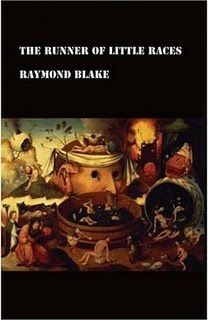
Ray Diamond – The Runner of Little Races

One of the few books
I own set in sans-serif.
It’s very good though.

Jacob Polley – The Brink

One of few writers
able to write metaphors
that serve their purpose.


Stephanie Leal – Metrophobia

American gem
I like the one she wrote on
her vile ex-boyfriend.


Ross Sutherland – Things to do Before You Leave Town

I laughed my ass of
at the titular poem
and ‘Two Moons For Mongs’.


Les Murray – The Ilex Tree

Strewth! Bleedin’ bonza
bushwackin’ boetian boy
breaks onto the scene!


Seamus Heaney – Death of a Naturalist

These are the poems
on which a legacy’s built –
that one about spades.


Daljit Nagra – Look We Have Coming to Dover!

A moving collage
of the voices that have been
soundtrack to his life.


William Shakespeare – Venus and Adonis

The moral being
that clingy chicks get in the
way of a good hunt.


Phil Brown
Poetry Editor
Related Posts Plugin for WordPress, Blogger...

Total Pageviews

Get Paid To Promote, Get Paid To Popup, Get Paid Display Banner