Showing posts with label Review. Show all posts

Monday, June 21, 2010

Tradition | Poetry | Simon Says


‘The jacket does not at first refer to Seeing Stars as containing “poems”, but eventually relents, and uses the p-word. If you have a very loose definition of “poem”, you’ll concur. I make it seven poems and 32 fictions.’
-Bill Greenwell, The Independent

“Are they poems, or prose poems, or flash fiction? I’m not sure, but they’re very more-ish.”
-Paul Batchelor, The Guardian

‘Is it a dog? Is it a horse? Or is it a poem by Simon Armitage? To say these poems resist classification is an understatement”
-Kate Kellaway, The Observer

Good art leaves us with more questions than answers. When we read a book, see a film, hear a band or watch a play that we particularly enjoy, we instinctively go and find out what the critics thought. We do this for a variety of reasons; partly because we want to find out if we were ‘right’, if our opinions are congruent with the people who are paid to have opinions, partly to see if there is anything that we missed and partly because it is uniquely pleasing to have our reactions enriched by other perspectives.

I shall tie my colours to the mast here – I particularly enjoyed Simon Armitage’s latest collection, Seeing Stars. I enjoyed it so much that I took it on a night out last Saturday and was secretly very happy whenever the lady I was with needed to go off to the bathroom, not because of the quality of her company, but because it meant that I could read a bit more of Armitage’s witty, idiosyncratic new collection. I woke up the next morning feeling fairly rough around 6AM, incredibly glad that I was awake bright and early so that I could have an undisturbed run at finishing off the last 20 pages before the day had even properly begun.

That said, I was left with the exact same question that every reviewer to touch the book seemed to be asking – ‘is this poetry?’ Let’s take an exemplary opening section, from the poem Knowing What We Know Now:

‘The elf said to Kevin, ‘You’re probably wondering why
I’m sitting here at your breakfast table this morning,
helping myself to your condiments, Kevin, I’m here to
make you a very special offer – let’s call it a once-in-a-
lifetime opportunity. Today you’re forty-four years and
thirty-six days old, and that’s exactly how long you’ve got
left! …’

When I spoke to my friend about my ‘is this poetry?’ conundrum (the friend whose bathroom breaks afforded me time to read more Armitage) she said “well it certainly looks like poetry.” And she was right. Go stand a few steps away from your screen… that chunk of Knowing What We Know Now is an absolute dead ringer for a bit of poetry.

But then this is purely cosmetic – the only consideration for the line-breaks appears to be the aesthetic of making the lines look even, for there is no sign of a meter or stress-pattern or any of your lyrical hallmarks. We’re not dealing with blank verse, free verse, fixed form, OuLiPo, calligrams or any of the old faithfuls that would usually help me bullshit my way through a review.

The best-fitting hat for this particular collection would appear to be ‘prose poetry’ for the mellifluous, fictional absurdity of the various vignettes at play in the collection – but even this is somewhat out the window as Armitage has gone to great trouble to line-break his work into the shape of verse.

Line-breaks or otherwise, the collection is still ideologically rooted in the prose poem tradition. Consider this passage on the subject of prose poetry from Luke Kennard’s excellent phd thesis, The Expanse: Self-Consciousness and the Transatlantic Prose Poem (many thanks for the author’s kind permissions):


When I first started writing about the prose poem I was drawn specifically to what I perceived to be its many authors’ sense of humour. Everything I read, from Charles Baudelaire’s Petit Poèmes En Prose to John Ash’s The Goodbyes engaged me first by making me laugh. Seeing as this wasn’t humour of the “set-up and punchline” variety – and that laughter in itself isn’t a considered critical reaction – I realised early on that I was going to have to formulate this response. Gradually it emerged that what I was really reacting to was self-consciousness, which is not necessarily a quality we aspire to in writing or life. Nevertheless, humour in the prose poem seemed to arise from a writer making a deliberate mistake: a metaphor which oversteps its own correlation; a situation woefully (if wilfully) misread or inverted; a self-deprecating aside after a sophisticated and complex passage; even a tacit admission that the very act of writing poetry feels somehow pretentious.”

I cannot think of a better introduction to the rich tradition behind both Kennard’s work and this latest offering from Armitage. Consider this idea of the “tacit admission that the very act of writing poetry feels somehow pretentious” as you read this section from Armitage’s My Difference:

‘I’ve been writing a lot of poems recently about my
difference but my tutor isn’t impressed. He hasn’t said as
much, yet it’s clear that as far as he’s concerned my
difference doesn’t cut much ice. He wants me to dress my
difference with tinsel and bells and flashing lights, or sit it
on a float and drive it through town at the head of the May
Day Parade. ‘Tell me one interesting fact about your
difference,’ he says, so I tell him about the time I lost my
difference down the plughole in a Bournemouth guesthouse
and had to fish it back with a paperclip on a length of
dental floss.’

So, in response to the satellite question, currently orbiting this collection – yes, it is poetry. And not just because I found it in the poetry section of Foyles. And not just because Simon Armitage wrote it. In eschewing the aurality of lyric poetry, the patterns of fixed forms or the margin-hugging shape of prose poetry, Armitage has left himself free to soak up a less worn out combination of elements from various traditions such as surrealism and satire.

If you like your deadpan wackiness and have a hankering for something that will leave you humming and giggling in equal measure, or if you simply can’t be bothered waiting for the next Luke Kennard or Ross Sutherland collections to come out, then you need to buy this book. Was this a review? Discuss.

Phil Brown
Poetry Editor

Tuesday, May 25, 2010

Issue 1 | Poetry | C-Words

I’ve always been somewhat of a completist. As a comic-book aficionado I would never be satisfied with a series until I’d owned every copy dating right back to the first. If I hear a song I enjoy on the radio, I react by saving up enough money to buy that band’s entire back-catalogue. If I enjoy a film, then I make a point of watching every  featurette and every interview I can find on the DVD until I feel like an authority on that movie.

I wouldn’t have brought this up unless I’d known that you all do this too. We’re a society obsessed with being vs. seeming. We trawl through bonus-discs and acoustic versions and making-ofs and rare B-sides and interviews. We’re addicted to what’s on the other side of the curtain.

In many ways, this outlines our obsession with those two dirty ‘C’ words in poetry – ‘Collected’ and ‘Complete’. Those two flirtatious little words are dotted across the spines on my shelves making the same promise we’ve all fallen for; ‘To read me, is to have the whole picture. I will take you back to where it all started and you will know this poet.’

We all want to go back to the start, read the complete Robert Frost as if we were the first people to discover him and chart his progress. We all flick to that first collection thinking ‘now, I will be experiencing the real poet, before he learned to hide himself in all that poetry.’ The idea sits there in our heads, that if we can go back in time to where the poet is finding their feet, then we will find that, just as we suspected, they are just like us behind all that talent and fame.

The more I play the debut game though, the more I realize it’s a false economy. The debut collection often represents the poet at their most guarded. The esoteric allusions come thicker and faster in many cases as a résumé to ward off the anti-youth brigade. It’s also a cliché but entirely true that a debut collection has often taken a whole lifetime longer to write than any of its follow-ups… often a lifetime spent without much first-hand experience of the literary community and professional criticism. I do genuinely believe however, that the internet is slowly but surely shifting trends in self-awareness and the value that writers and people who write place on their work.

Let me save you some time. Behind all that talent and (often posthumous) fame, poets are just like you. They watch trashy television shows and eat fast food. They have the exact same relationship problems that you have. They all worry sometimes that their life has been pointless. They lay awake at night wondering whether or not to send an email to their ex. They get pissed off when other poets beat them for a promotion. At one point or another, they have all broken wind. If you take all these things as read, then you will not need to go trawling through ‘Complete’ collections waiting for the poets to tell you this for themselves.

What you will find in debut collections, however, is the poet’s opening gambit. Their entrance music if you will. I have taken the liberty of composing 30 Haiku-Reviews of debut collections from people I respect. You will see that, in a few cases, it is not their abilities as a poet that I respect in these people, but there is nobody on this list that I do not look up to for one reason or another.


Ted Hughes – Hawk in the Rain

Devastatingly
powerful in its address
and orality.


T.S. Eliot – Prufrock and Other Observations

How very awkward
and solipsistic it is
to be middle-classed.

Robert Lowell – Land of Unlikeness

So very prolix
and esoteric. Who knew
he’d write Life Studies?

Robert Frost – North of Boston

If you are after
long, rural and lyrical
poems, you’re in luck!

Geoffrey Hill – For the Unfallen

Don’t worry mate, I
didn’t really get what he
was saying either.

Charles Bukowski – Flower, Fist and Bestial Wail

some goddamn asshole
in the flat next door won’t stop
screwing his damn wife.

Sylvia Plath – The Colossus and Other Poems

Some fine craftsmanship
but Plath will drag you into
a morbid hell-world.

Rudyard Kipling – Barrack-Room Ballads

A little racist
on occasion, but the man
sure had good rhythm.


Elizabeth Bishop – North and South

Knowing how angry
the ‘female’ prefix made her
… just ‘a good poet’.


Walt Whitman – Leaves of Grass

Depending on which
edition you own, you could
be here for a while.

Dylan Thomas – 18 Poems

So much beautiful
nonsense – so shallow that it
appears to be deep.

DH Lawrence – Amores

Get lost in the cold
music of melancholy,
wise lyricism.

William Blake – Songs of Innocence

Something tells me that
this series is due to take
a rather dark turn.

Billy Corgan – Blinking With Fists

Seriously bad.
And I’m not just saying that.
Really bad writing.

Tim Burton – The Melancholy Death of Oyster Boy

Not for young children
but ideal for those dark souls
who enjoyed Corpse Bride.

Matthew Welton – The Book of Matthew

Once you get your head
into his weird semantic
mind-fuck, you’ll love it


Luke Kennard – The Solex Brothers

Trippy prose poems
to leave you scratching your head
whilst laughing out loud.

Wallace Stevens – Harmonium

If nothing else, you
will learn a lot of new words
(keep Google open).

Hugo Williams – Symptoms of Loss

Probably his worst
collection but worth a read
for exposition.


John Berryman – The Dispossessed

It’s all there, the wit,
incantational syntax,
a drunk genius.

Tennessee Williams – In the Winter of Cities

Whilst it’s his drama
we remember, his poems
gave him his vision.

Nicholas Swingler – Dream of the Condom and other poems

It’s a tragedy
that more people don’t know this
book. Go buy it now!


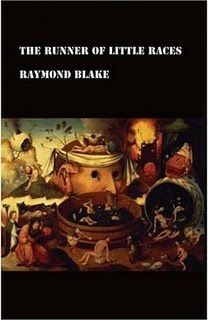
Ray Diamond – The Runner of Little Races

One of the few books
I own set in sans-serif.
It’s very good though.

Jacob Polley – The Brink

One of few writers
able to write metaphors
that serve their purpose.


Stephanie Leal – Metrophobia

American gem
I like the one she wrote on
her vile ex-boyfriend.


Ross Sutherland – Things to do Before You Leave Town

I laughed my ass of
at the titular poem
and ‘Two Moons For Mongs’.


Les Murray – The Ilex Tree

Strewth! Bleedin’ bonza
bushwackin’ boetian boy
breaks onto the scene!


Seamus Heaney – Death of a Naturalist

These are the poems
on which a legacy’s built –
that one about spades.


Daljit Nagra – Look We Have Coming to Dover!

A moving collage
of the voices that have been
soundtrack to his life.


William Shakespeare – Venus and Adonis

The moral being
that clingy chicks get in the
way of a good hunt.


Phil Brown
Poetry Editor
Related Posts Plugin for WordPress, Blogger...

Total Pageviews

Get Paid To Promote, Get Paid To Popup, Get Paid Display Banner